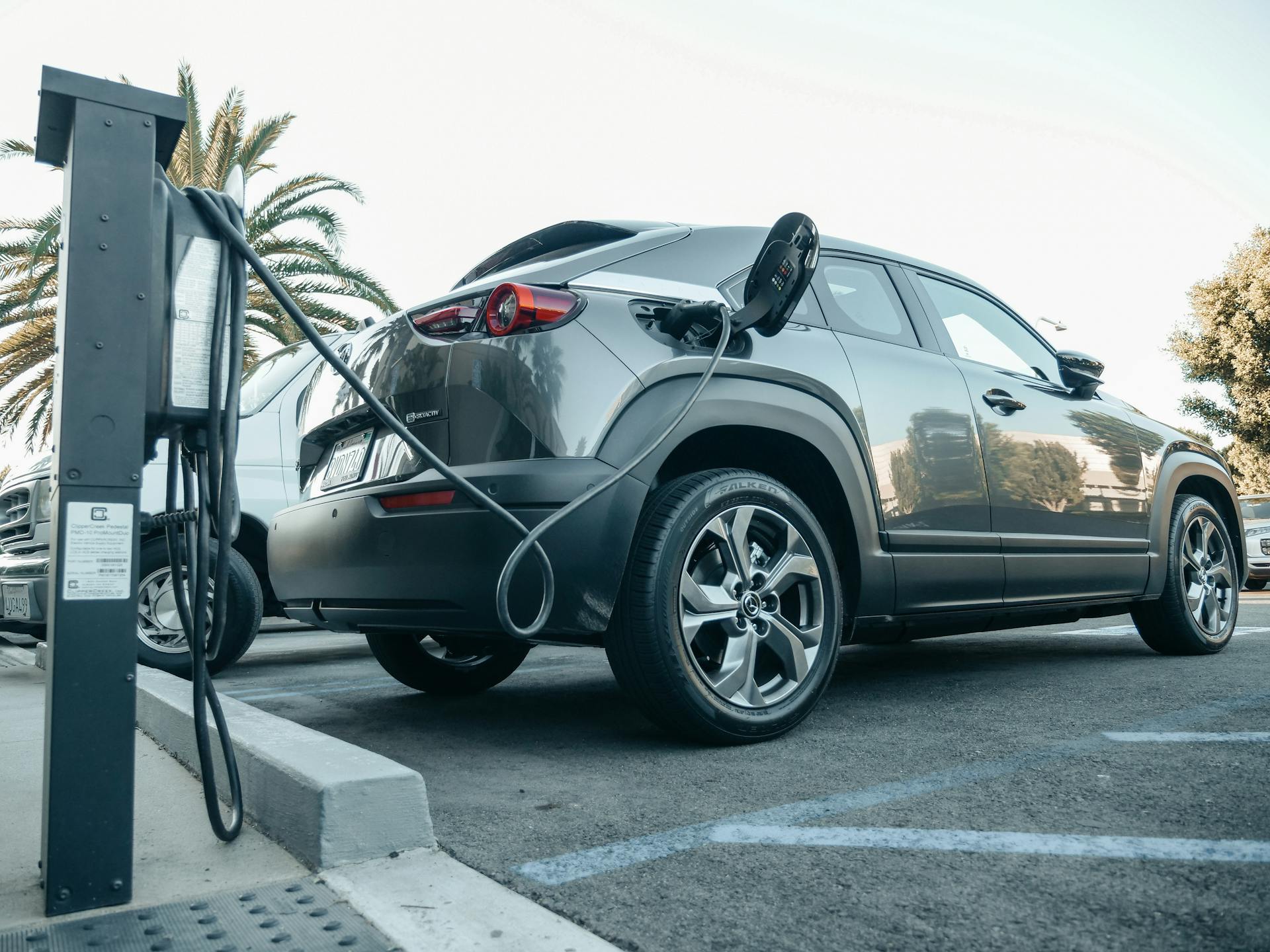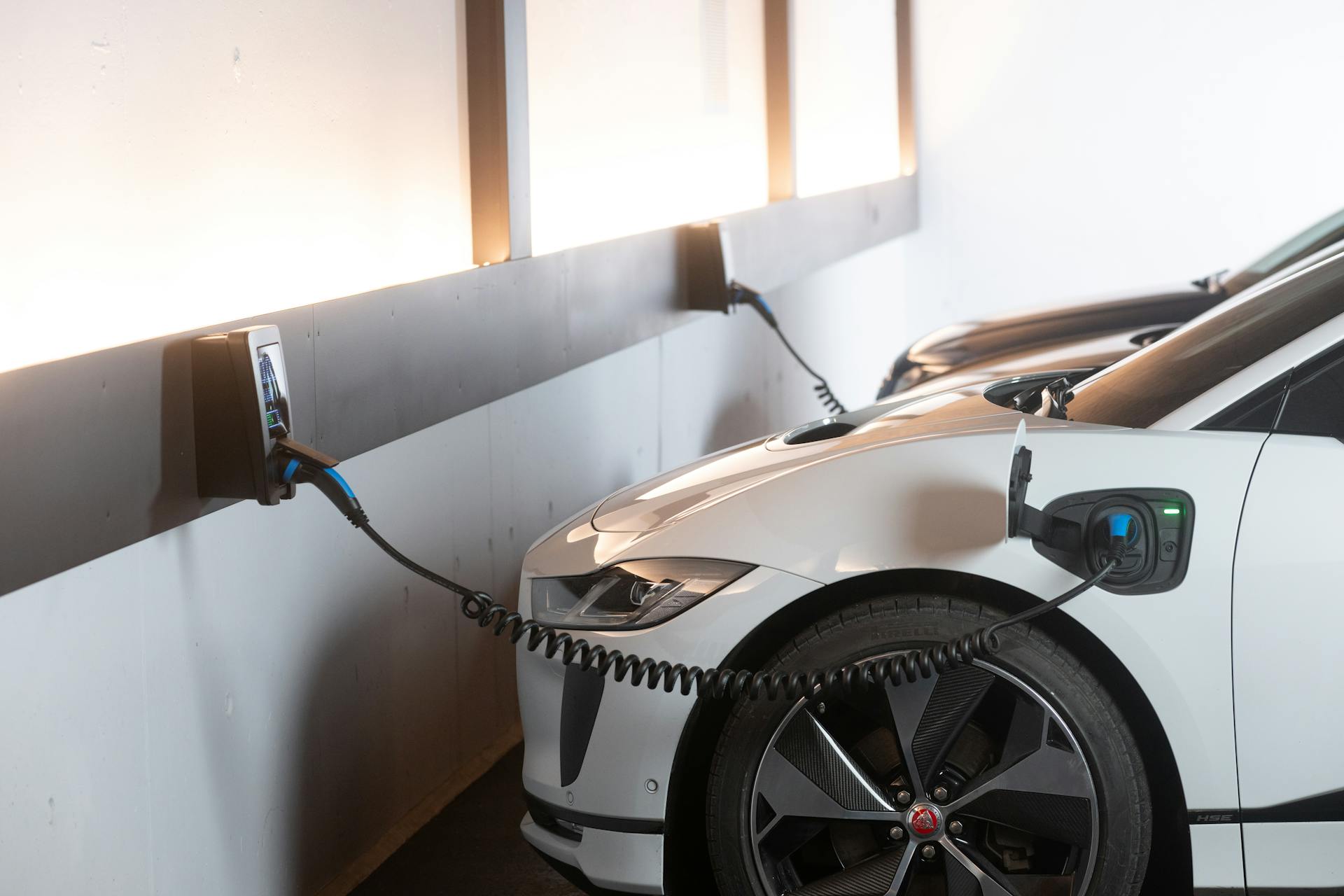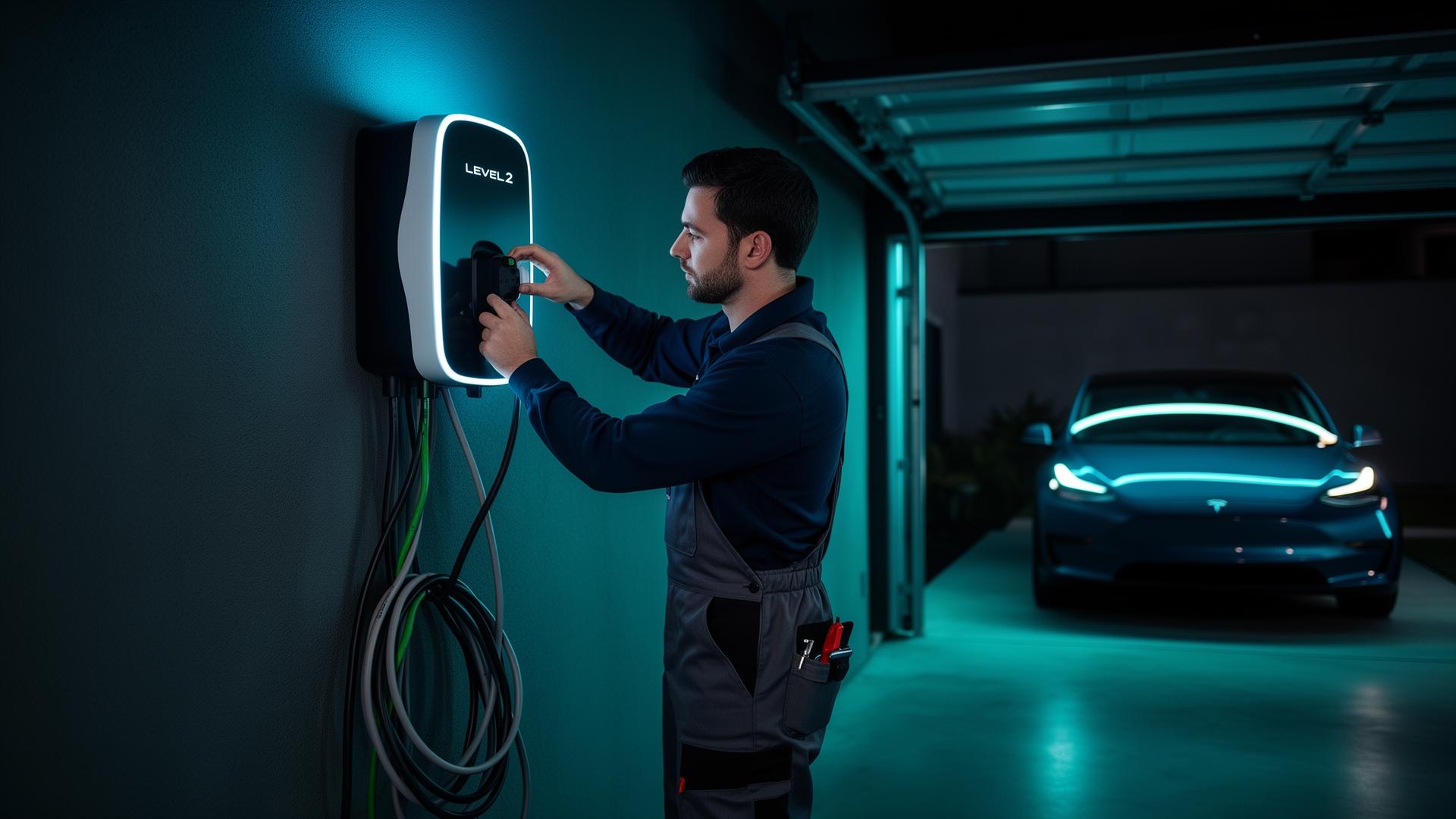
Both NEMA 14-50 and hardwired Level 2 EV charger installs are common in Langley, both are code-compliant, and both will charge your EV overnight. The choice comes down to four practical factors: charging speed, finish quality, portability, and whether you might want to swap chargers later.
This guide is what we tell every Langley customer who asks "should I just put in a regular outlet, or hardwire it?"
Quick comparison
| NEMA 14-50 outlet | Hardwired Level 2 | |
|---|---|---|
| Max continuous current | 40A (32A for older receptacles) | 48A |
| Range added per hour (Tesla Model 3) | ~37 km/h | ~50 km/h |
| Range added per hour (Ioniq 5) | ~40 km/h | ~58 km/h |
| Looks | Outlet visible, charger plugs in | Charger only, no exposed receptacle |
| Portability | High (charger unplugs) | Low (charger is wired in) |
| Charger options | Any plug-in EVSE | Tesla Wall Connector, hardwired ChargePoint, hardwired Grizzl-E |
| Compliance | BC Electrical Code 26-722 | BC Electrical Code 86-302 |
Pick NEMA 14-50 if...
You drive a Tesla and want to use the included mobile connector
Every Tesla ships with a mobile connector that plugs into a NEMA 14-50 outlet and delivers 32A. That's free hardware you already own. Putting in a NEMA 14-50 outlet for $1,400 to $1,700 as part of a Langley EV charger install gets you charging at home immediately, no extra hardware purchase needed.
You expect to move within 5 years
A plug-in charger comes with you. A hardwired charger doesn't (well, the unit can come off but the wiring stays). Renters, people in transitional housing, or anyone who's not sure they'll be in the same house in 3 to 5 years should default to plug-in.
You may upgrade your charger in the future
Charger technology is changing. Bidirectional charging (V2L, V2H) is becoming standard on new EVs, and the chargers that support it are starting to ship. With NEMA 14-50, you swap chargers in 30 seconds without an electrician. With hardwired, you pay for an electrician to come back.
You also want a backup plug for other 240V loads
A NEMA 14-50 outlet doubles as a generator inlet, RV hookup, or welder outlet. Some Langley homeowners with home shops or RVs put one in for the EV but appreciate the dual-use.
Pick hardwired if...
You drive a Tesla and you bought the Wall Connector
The Tesla Wall Connector is hardwired only. If you're using one, hardwired is your default. The Wall Connector also delivers 48A — meaningfully faster than the 32A you'd get from the mobile connector through a NEMA 14-50.
You want maximum charging speed
48A vs 40A is roughly 20% faster charging. For most overnight scenarios it doesn't matter (both fully recharge by morning), but if you frequently top up between trips or share a charger with another household member, the speed adds up.
You want the cleanest finish
Hardwired chargers mount flush to the wall with no visible receptacle. For a finished garage or an exterior install where aesthetics matter, this looks better. Subjective, but real.
You want bidirectional support without future rewiring
Some bidirectional chargers (Wallbox Quasar, Ford Charge Station Pro) are hardwired only. If you're betting on V2H/V2G in the next 5 years, hardwired keeps that option open without rewiring later.
The amperage tradeoff in real numbers
People ask if 40A vs 48A "really matters." Here's the math for common EVs charging from 20% to 80%:
| Vehicle | 20% to 80% on 40A NEMA 14-50 | 20% to 80% on 48A hardwired |
|---|---|---|
| Tesla Model 3 (60 kWh) | 4.5 hrs | 3.7 hrs |
| Tesla Model Y (75 kWh) | 5.6 hrs | 4.7 hrs |
| Ford Mach-E (88 kWh) | 6.6 hrs | 5.5 hrs |
| Hyundai Ioniq 5 (77 kWh) | 5.8 hrs | 4.8 hrs |
| Kia EV9 (100 kWh) | 7.5 hrs | 6.3 hrs |
For overnight charging (8+ hours plugged in), both finish before morning on every car. Where 48A matters: you charged to 50% at lunch, you need to charge to 80% before a 5pm departure, and you have 4 hours instead of 6.
What about NEMA 6-50?
A few customers ask about NEMA 6-50 (a 240V receptacle without the neutral pin). Same continuous current rating as 14-50 (40A continuous on a 50A breaker), but the lack of neutral means it can't double as an RV outlet, and not all portable EVSEs come with the right plug. Default to NEMA 14-50 unless there's a specific reason for 6-50.
The install cost is essentially the same
In Langley, the typical install for either approach falls in the $1,400 to $2,400 range, with cable run length being the actual cost driver. The connection type difference is within $100 either way:
- NEMA 14-50 install: charger hardware is your problem. Outlet + breaker + wire + permit + labor.
- Hardwired install: includes wire termination at the unit, but skips the receptacle.
We've quoted hundreds of EV charger installs and the connection type is rarely what swings the price.
What we'd actually do
Two scenarios, two recommendations:
Single Tesla owner, going to drive Teslas for the foreseeable future: Tesla Wall Connector, hardwired, 48A on a 60A circuit. The unit costs $580, the install is the same as any Level 2, and you get the fastest charging plus the cleanest finish.
Multi-car household, mixed brands, may swap cars: NEMA 14-50 outlet, then plug in whichever portable charger fits the car. Tesla mobile connector for the Tesla, JuiceBox or Grizzl-E portable for the non-Tesla.
Both approaches require the same permit, the same inspection, and the same panel capacity. The difference is in the last 12 inches.
How to start
Send us photos of your panel and the install location. We'll quote both options if you're undecided, and you can pick after seeing the numbers. No charge for the quote, no commitment.
Call (236) 862-1196 or send your project details and panel photos. We respond same-day in most cases.
Frequently asked
- Yes, slightly. NEMA 14-50 is rated for 40A continuous (50A breaker per code). A hardwired Level 2 charger on a 60A breaker can deliver 48A continuous. The difference: about 1.5 to 2 km of range per hour. For overnight charging, both fully recharge most EVs.
- Only NEMA 14-50 chargers come off easily. The Tesla mobile connector or any plug-in EVSE just unplugs and goes with you. A hardwired charger has to be uninstalled by an electrician (and the wiring stays). For people who rent or expect to move within 5 years, plug-in is the smart pick.
- Both are safe when installed properly. Hardwired connections have one less point of potential failure (the plug + receptacle), which is why hardwired is preferred in some commercial codes. For residential, both are equally code-compliant when the wiring and installation are correct.
- BC Electrical Code limits continuous loads on outlets to 80% of the breaker rating. A NEMA 14-50 outlet is on a 50A breaker, so the EV charger plugged into it can only draw 40A continuous. Hardwiring removes the outlet from the equation, allowing higher continuous current up to 80% of the breaker rating (so 48A on a 60A breaker).
- Almost identical in Langley. Hardwiring saves the cost of a NEMA 14-50 receptacle (about $30) but adds termination labor. Net difference is usually within $100 either way. The cost driver is cable run length, not the connection type.